
FROM THE TABLE
For the last few years, the conversation around technology in food businesses has been relentless. AI menus. Automated kitchens. Frictionless ordering. Digital-first everything. The message was consistent: adopt or fall behind.
Something is shifting. The industry is starting to reckon with what got lost in that rush — and it turns out what got lost was the thing food businesses are actually selling.
Not the food. The feeling of being taken care of.
There's still no substitute for hospitality. The restaurants that build lasting loyalty will be the ones that stay focused on how they make people feel when they walk through the door.
This doesn't mean technology was the wrong direction. It means the framing was wrong. Technology in a food business should do one thing: reduce the friction and cognitive load that gets in the way of the human work. Ordering, payment, inventory, reservations — these are operational problems. Solve them with technology, and you free your team to do what no algorithm can replicate.
The problem was that many businesses used technology as the experience, rather than in service of it. Self-ordering kiosks that replaced the one moment of human contact in a fast transaction. Apps that created more steps, not fewer. Digital menus that nobody could navigate.
The businesses getting this right in 2026 are the ones that ask a different question. Not "how do we automate this?" but "what does this team member need to do their job better?" The technology disappears into the background. The hospitality stays front and centre.
SIDE PLATE
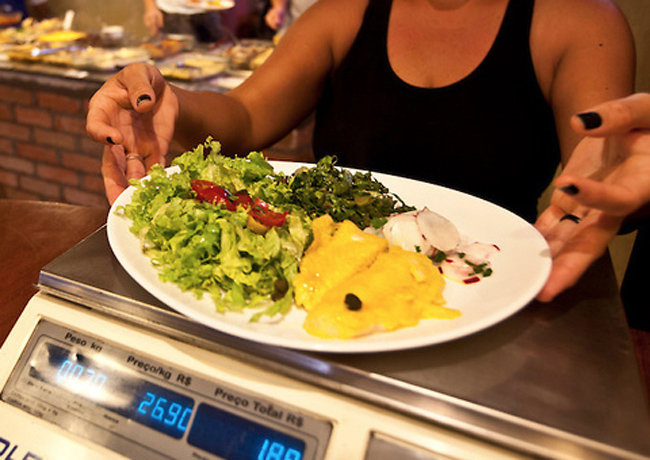
Restaurants by weight — pay per gram — are everywhere in Brazil and I've been watching them closely. The model is simpler than it sounds: you fill your plate, you weigh it, you pay. But behind that simplicity is an operation that demands serious discipline.
You can't estimate here. Every ingredient has a direct, measurable cost. Waste shows up immediately in the numbers. Restock timing matters. Production planning becomes precise rather than approximate. It's one of the more operationally demanding formats I've seen — disguised as one of the most casual.
Whether the format travels well to other markets is an open question. But the discipline it enforces — knowing your costs to the gram, literally — is worth borrowing regardless of what model you run.
WHAT'S COOKING
The most useful question to ask about any technology in your business: does it create space for better hospitality, or does it replace it?
If you can’t answer that clearly, that’s usually a sign the technology was adopted for the wrong reason.
Carla
Founder, kooleats
